
Medicare’s New 20% Same-Day Service Reduction: What Dermatology Practices Need to Know for 2027

Dermatology practices should prepare for an important Medicare reimbursement change beginning January 1, 2027. One of the most significant changes involves payment when a separately identifiable office or outpatient E/M service is performed on the same day as a procedure with a 0-day global period. For dermatology practices, where E/M services and a procedure are […]
Is It a Shave Removal or a Biopsy? Why Intent Matters More Than Technique

When coding a shave procedure, the distinction between a biopsy and a shave removal comes down to intent, not technique. A lesion that is entirely removed to determine its diagnosis is coded as a biopsy, even if the provider takes a wider margin and successfully removes all visible lesion tissue. Conversely, when the purpose of […]
Understanding CMS Contractor Oversight, Audit Reform, and Provider Education

During the 2026 National Provider Conference in Charlotte, NC, The Centers for Medicare & Medicaid Services (CMS) officials outlined the agency’s evolving approach to medical review, contractor oversight, and program integrity, emphasizing a shift toward targeted audits and provider education rather than broad enforcement actions. The session featured remarks from CMS Division of Medical Review […]
When is an Unna Boot Separately Billable After a Surgical Procedure?

In most cases, routine postoperative dressings are considered part of the surgical service and are not separately reportable. This generally includes standard wound dressings, Steri-Strips, pressure dressings, and other dressings applied as part of normal postoperative care. However, CPT 29580 (application of an Unna boot) may be separately billable when it is used to treat […]
The Rise of Data Fusion and the Next Era of Healthcare Enforcement

The most significant messages learned from presentations at both the HCCA Compliance Institute and the National Provider Compliance Conference (NPCC) were not only that The Centers for Medicare and Medicaid Services (CMS) is using artificial intelligence or expanding fraud prevention efforts. The bigger story is data fusion. On June 30, 2025, as part of the […]
Advance Your Expertise with Online Dermatology Training from Compass Healthcare Academy

Healthcare regulations, coding guidelines, documentation requirements, and payer expectations continue to evolve. For medical coding and practice management professionals, staying current isn’t optional—it’s an important part of protecting your practice, reducing risk, and supporting operational efficiency. Compass Healthcare Academy makes expert-led education accessible with convenient, on-demand online training and AAPC-approved CEUs. Developed by the experts […]
Can You Bill Separately for Puracol Collagen Dressings?

No, Puracol collagen is not separately billable as a supply. It is classified as a dressing under HCPCS and is generally included in the overall service. However, the application of the product may be reportable using the appropriate CPT 1527X series code when it meets the definition of a skin substitute application. Why This Matters […]
Are You Urgently Addressing Emerging Legal and Compliance Risks Related to PA and APRN Supervision?

Healthcare organizations are facing growing legal and compliance risks as state laws continue to evolve around Physician Assistant (PA) and Advanced Practice Registered Nurse (APRN) supervision, scope of practice, credentialing, and licensure. While many of these changes were introduced during or after the COVID-19 public health emergency to expand access to care, they have also […]
When is an E/M Service Considered Separate and Distinct from a Dermatology Procedure Performed on the Same Day?
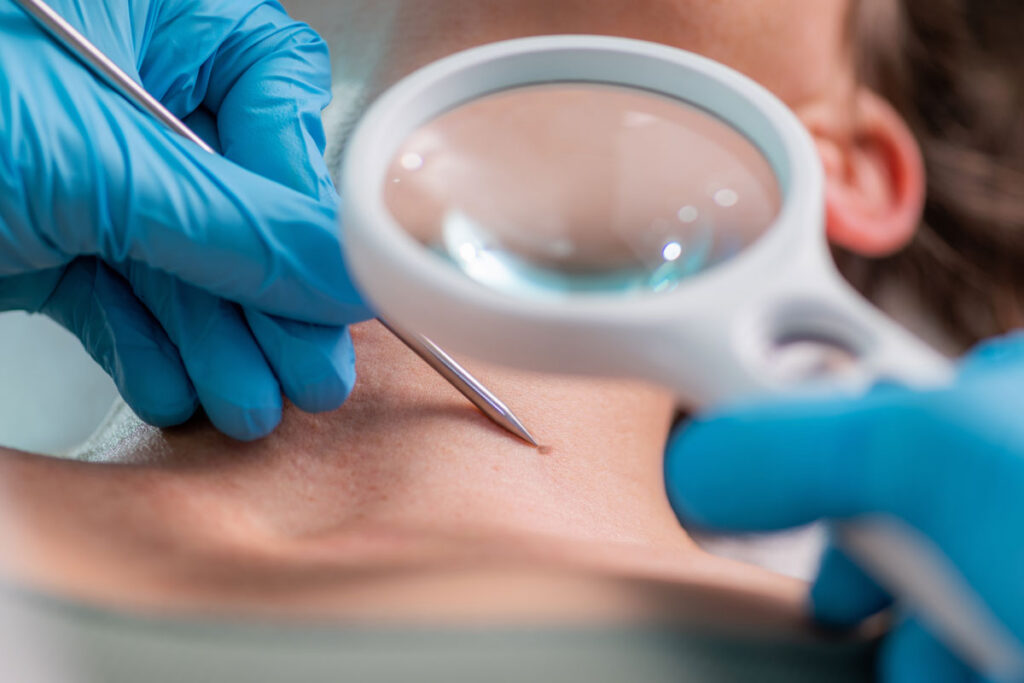
An E/M service is considered separate and distinct from a dermatology procedure when the provider performs and documents a significant, separately identifiable evaluation and management service that goes above and beyond the work normally included in the procedure. In these cases, the E/M service may be reported with modifier 25 in addition to the procedure. Importantly, CMS […]
High-Risk Liability Areas in Aesthetic and Dermatology Practices

As aesthetic and dermatology services continue to expand, so does regulatory scrutiny and liability exposure. While many procedures are viewed as routine or low-risk, the consequences of inadequate supervision, poor documentation, or scope-of-practice violations can be significant. Understanding where risk exists, and implementing safeguards to address it, are essential for protecting patients, providers, and organizations. […]